In today’s digital economy, data has become one of the most valuable assets a business can possess. Every interaction—whether it’s a customer browsing a website, making a purchase, or engaging on social media—generates data. When properly collected, processed, and analyzed, this data transforms into powerful insights that can shape business strategies, optimize operations, and unlock new opportunities.
This is where big data analytics comes into play. Organizations across industries—from tech giants like Amazon and Google to startups and SMEs—are leveraging big data to drive growth and innovation. In this comprehensive guide, we’ll explore how big data analytics fuels business success, the key technologies involved, and how companies can harness its full potential.
What Is Big Data Analytics?
Big data analytics refers to the process of examining large and complex datasets—commonly known as “big data”—to uncover patterns, correlations, trends, and insights that support better decision-making.
Big data is typically defined by the “3 Vs”:
- Volume – Massive amounts of data generated daily
- Velocity – The speed at which data is produced and processed
- Variety – Different types of data (structured, unstructured, semi-structured)
Modern businesses deal with data from multiple sources, including:
- Social media platforms
- Customer transactions
- IoT devices
- Website analytics
- Mobile applications
Analyzing this data effectively allows businesses to stay competitive in an increasingly data-driven world.
Why Big Data Analytics Matters for Business Growth
1. Data-Driven Decision Making
One of the most significant advantages of big data analytics is the ability to make informed decisions based on real-time data rather than intuition.
Businesses can:
- Identify trends and patterns
- Forecast demand
- Reduce uncertainty in planning
For example, companies like Netflix use data analytics to determine which shows to produce based on viewer preferences, ensuring higher success rates and customer satisfaction.
2. Enhanced Customer Experience
Understanding customer behavior is key to business growth. Big data enables organizations to:
- Analyze customer preferences
- Personalize recommendations
- Improve customer service
E-commerce platforms like Amazon use predictive analytics to suggest products tailored to individual users, significantly increasing conversion rates and customer loyalty.
3. Operational Efficiency
Big data analytics helps streamline operations by identifying inefficiencies and optimizing processes.
Businesses can:
- Reduce costs
- Improve supply chain management
- Automate repetitive tasks
For instance, logistics companies use data analytics to optimize delivery routes, reducing fuel consumption and improving delivery times.
4. Competitive Advantage
Organizations that leverage big data gain a significant edge over competitors.
Benefits include:
- Faster decision-making
- Better market insights
- Ability to respond quickly to changes
Companies like Uber use real-time data to adjust pricing dynamically, ensuring optimal supply-demand balance.
Key Components of Big Data Analytics
1. Data Collection
Data is collected from various sources such as:
- Websites and mobile apps
- CRM systems
- Sensors and IoT devices
- Social media platforms
The more comprehensive the data, the better the insights.
2. Data Storage
Big data requires scalable storage solutions like:
- Cloud platforms
- Data warehouses
- Data lakes
Cloud providers like Microsoft Azure and Amazon Web Services offer robust storage and processing capabilities.
3. Data Processing
Processing involves cleaning, transforming, and organizing data for analysis. Technologies such as:
- Hadoop
- Spark
- ETL (Extract, Transform, Load) tools
are commonly used to handle large datasets efficiently.
4. Data Analysis
This is where insights are generated using:
- Statistical analysis
- Machine learning algorithms
- Predictive modeling
5. Data Visualization
Visualization tools help present insights in an easy-to-understand format through:
- Dashboards
- Charts
- Graphs
Tools like Tableau and Power BI are widely used for this purpose.
Types of Big Data Analytics
1. Descriptive Analytics
Answers the question: What happened?
- Sales reports
- Website traffic analysis
2. Diagnostic Analytics
Answers: Why did it happen?
- Root cause analysis
- Data mining
3. Predictive Analytics
Answers: What is likely to happen?
- Demand forecasting
- Risk assessment
4. Prescriptive Analytics
Answers: What should be done?
- Optimization strategies
- Decision recommendations
How Big Data Drives Innovation
1. Product Development
Big data enables businesses to create products that better meet customer needs.
Example:
- Analyzing user feedback to improve features
- Identifying gaps in the market
Companies like Apple continuously refine their products using user data insights.
2. Business Model Transformation
Data can inspire entirely new business models.
Examples:
- Subscription-based services
- On-demand platforms
- Data-driven services
Platforms like Spotify leverage user data to create personalized playlists and subscription models.
3. Automation and AI Integration
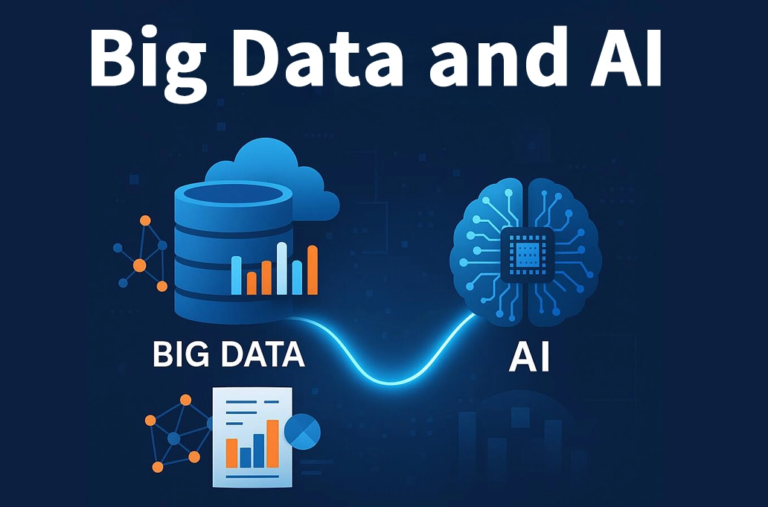
Big data fuels artificial intelligence and machine learning systems.
Applications include:
- Chatbots
- Fraud detection
- Recommendation engines
4. Market Expansion
Businesses can use data analytics to identify new markets and opportunities.
- Analyze regional demand
- Understand cultural preferences
- Optimize marketing strategies
Real-World Use Cases
1. Retail Industry
Retailers use big data to:
- Predict buying patterns
- Manage inventory
- Personalize marketing
2. Healthcare Industry
Big data helps:
- Improve patient outcomes
- Predict disease outbreaks
- Optimize hospital operations
3. Finance Sector
Financial institutions use analytics for:
- Fraud detection
- Risk management
- Credit scoring
4. Manufacturing
Manufacturers leverage data to:
- Predict equipment failures
- Optimize production processes
- Reduce downtime
Challenges of Big Data Analytics
Despite its benefits, big data analytics comes with challenges:
1. Data Privacy and Security
Handling large volumes of sensitive data requires strict security measures.
2. Data Quality
Poor-quality data leads to inaccurate insights.
3. Integration Complexity
Combining data from multiple sources can be difficult.
4. High Implementation Costs
Setting up infrastructure and hiring skilled professionals can be expensive.
Best Practices for Implementing Big Data Analytics
1. Define Clear Objectives
Start with specific goals such as:
- Increasing sales
- Improving customer retention
2. Invest in the Right Tools
Choose tools that align with your business needs.
3. Build a Skilled Team
Hire data scientists, analysts, and engineers.
4. Ensure Data Governance
Establish policies for:
- Data quality
- Security
- Compliance
5. Start Small and Scale
Begin with pilot projects and expand gradually.
The Future of Big Data Analytics
The future of big data analytics is promising, driven by advancements in technology.
1. Artificial Intelligence and Machine Learning
AI will enhance data analysis capabilities, making predictions more accurate.
2. Real-Time Analytics
Businesses will increasingly rely on real-time insights for instant decision-making.
3. Edge Computing
Processing data closer to the source will reduce latency and improve efficiency.
4. Data Democratization
More employees will have access to data, enabling better decision-making across organizations.
Conclusion
Big data analytics is no longer a luxury—it’s a necessity for businesses aiming to thrive in a competitive landscape. By transforming raw data into actionable insights, companies can make smarter decisions, enhance customer experiences, and unlock new growth opportunities.
From improving operational efficiency to driving innovation, the impact of big data analytics is profound and far-reaching. Organizations that embrace data-driven strategies today will be the leaders of tomorrow.
As technology continues to evolve, businesses must stay ahead by investing in big data capabilities, fostering a data-driven culture, and continuously adapting to new trends. In doing so, they can harness the true power of big data analytics to fuel sustainable growth and innovation in the digital age.